Spot Workplace Retaliation Warning Signs: Protect Your Career | HR Armor
How to Spot Workplace Retaliation Before It Escalates
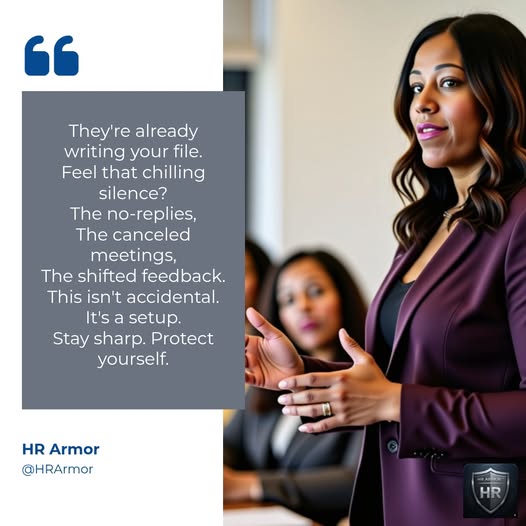
They’re building the file on you.
You feel it first — not in policy, not in writing, but in energy.
The sudden silence.
The shifted tone.
The rewritten feedback.
What most employees don’t realize is that retaliation rarely starts loud.
It starts quietly, procedurally, and defensibly.
Here’s how it shows up before it escalates.
🚩 Sudden Silence
Your manager stops responding to emails.
Meetings are canceled without explanation.
You’re quietly removed from distribution lists.
Nothing is announced.
Nothing is explained.
You’re simply no longer included.
🚩 Feedback Shift
Your “strengths” become “areas for improvement.”
Positive feedback disappears from written records.
Constructive input turns personal or vague.
The work hasn’t changed — the description of it has.
🚩 Workload Change
Projects you owned are reassigned.
Deadlines become unrealistic.
Meaningful work slowly disappears.
You’re still busy — just no longer positioned for success.
🚩 Social Isolation
Colleagues stop inviting you to lunch.
Team chats quiet when you enter.
You’re excluded from informal conversations and decisions.
This isn’t accidental.
Isolation weakens credibility before documentation appears.
🚩 Documentation Spike
HR asks for “clarifying” emails.
Managers start taking detailed notes.
Everything suddenly becomes “for the record.”
This is the turning point.
They’re not waiting.
They’re documenting.
The Risk Isn’t If
The risk is when.
Retaliation is not a feeling.
It’s a pattern of behavior.
And patterns can be proven — if they’re captured early.
Most employees wait until discipline appears to protect themselves.
By then, the record is already hardened.
Protection starts when the energy changes — not when the warning letter arrives.
HR protects the company.
HR Armor helps you protect yourself.
If these warning signs feel familiar, it’s because documentation has already begun.
Click below to access protection and defense tools that help you identify retaliation early, document strategically, and safeguard your record before decisions are finalized without you.